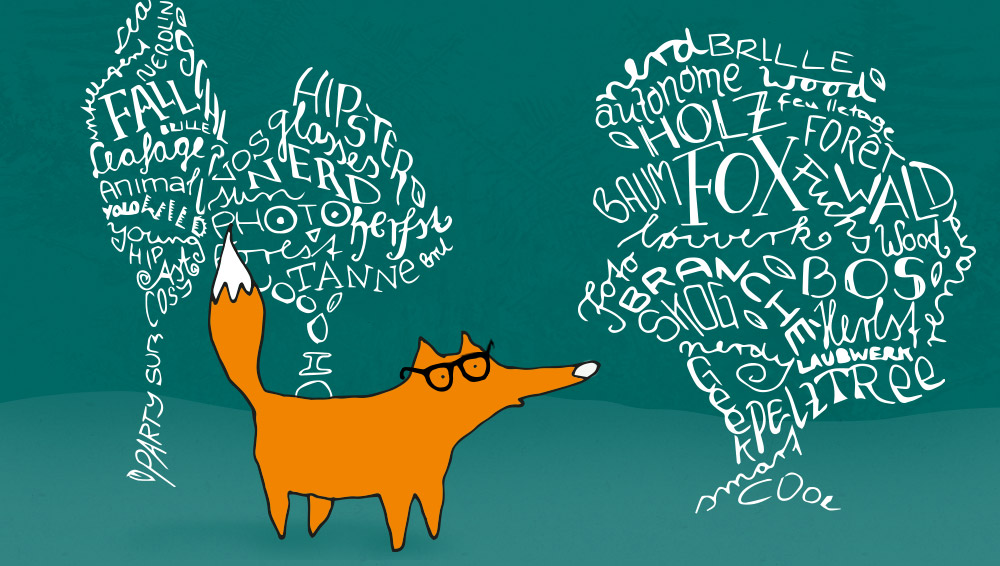
What words do you spontaneously associate with the term “fox”? Reynard, auburn pelt, silver fox, foxy lady or even hipster pet? In a similar fashion, you can create tags for a design when uploading it. Upon confirmation to clear it for Spreadshirt’s Marketplace, you can make sure that others find your design when personalising products in the T-Shirt Designer, or when looking for products in the Marketplace. By means of adding the right tags, you help folks find your design when they enter a search term. In this blog post, we will shed light on how you can help customers and search engines find your designs. Read on!
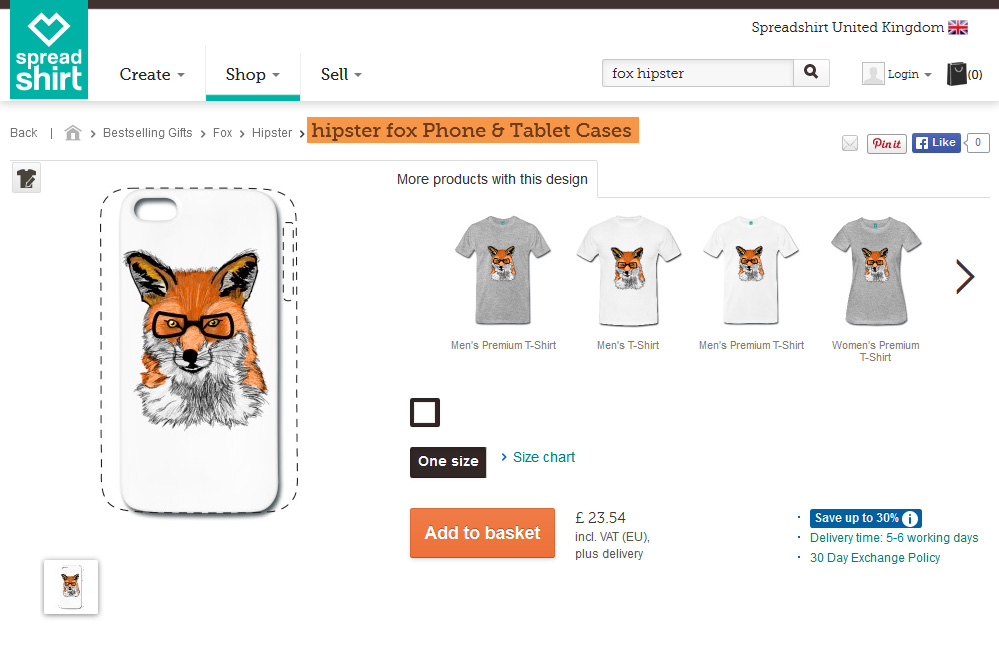
First be sure to find a suitable name. The design name should – in a nutshell – give a neat description of the design. On the one hand it’s nice to have a short and succinct name for a design, and on the other hand you should remember that the design’s name will again pop up on the customer’s invoice, so it’d be nice to convey a reputable impression.
Let’s say somebody is looking for a phone case with a fox on it. In his Marketplace search, the person enters “hipster fox phone case”, upon which he receives a number of different design suggestions. Then he clicks on a design that he takes a spontaneous liking to. The design chosen for the purpose of illustration here is called “hipster fox”, which seems quite a fitting name in light of the nerdy glasses the little guy is sporting on his snout. The other terms you can read here (see red edging) are often confused with the design description or design tags – but the wording is only a combination of product name and product type.
Adding suitable keywords – tags – helps finding your design.
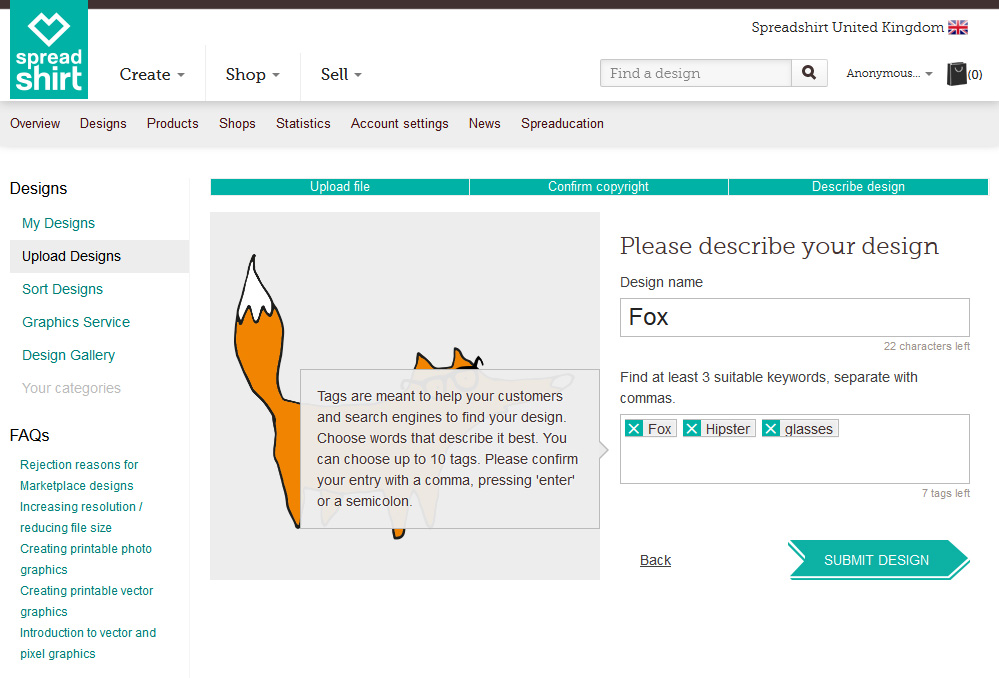
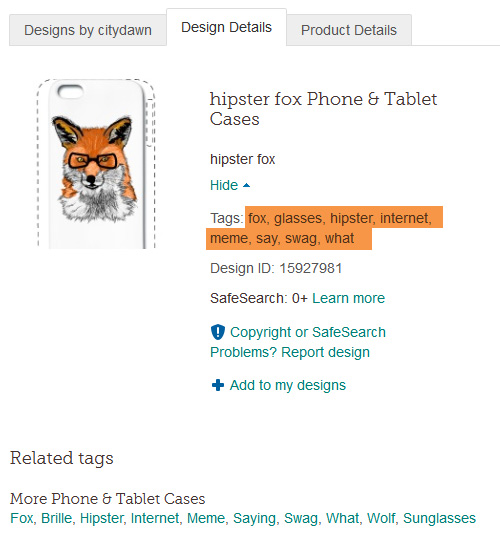 In the course of the upload process, you can choose several tags that best describe your design. These can be synonyms, analogical words or fitting associations. The main thing is that the tags you choose are not too general, which means that you should try to narrow down your choice thematically to help your customers find what they are looking for.
Some of the tags chosen here are obvious choices (fox, glasses), and others are quite clever (e.g. “what“ to cater to a keyword search for “what does the fox say“). ”Hipster“ does seem like another obvious tag, but “Internet“ has little to do with our hipster fox. The rest of the keywords are associations that spring to mind when thinking of possible search terms that people could use. Adding the tag “nerd” would definitely be a good idea here.
How should your tags be worded?
If possible, a tag should consist of only one (if possible short) word. Groups of words or whole sentences should best be avoided. In some cases such as e.g. a design depicting a well-known saying or proverb, you may divert from this rule. What you should do, however, is consider whether the tag you choose is necessary or not.
Going back to the example of our fox, you could have chosen the proverb “as smart as a fox” as one tag and then opted for adding the tags “crafty”, “cunning” and “clever”. Whether this would have improved the chances in terms of pertinent search results for the design in question is questionable, though.
And however big the lure: avoid using trending tags that don’t fit your design. Unsuitable tags will not make a customer chose your hipster fox design if they are e.g. looking for a “keep calm & carry on” or ”I Love NY“ design.
Do you have any questions, queries or tips you feel like sharing with us? We need to know! Please drop a comment below, and we’ll get back to you asap!